
LED strip lights have revolutionized the way we light our homes, businesses, and even our cars. They’re flexible, energy-efficient, boast an incredibly long lifespan, and are incredibly versatile. But with so many options out there, it’s easy to get overwhelmed. One common question that pops up is: What’s the difference between 5630 and 5730 LED strip lights?
If you’ve found yourself scratching your head over this, you’re not alone. This guide is in-depth. It will break down all you need to know to make the perfect choice for your space. It covers energy efficiency and design aesthetics.
The Gist: Both 5630 and 5730 LED strips are high-brightness options, ideal for situations where you need a lot of light. The 5730 is slightly larger and can be a tad brighter, but the 5630 is often more energy-efficient.
Let’s dive deeper into the world of LED strip lights and illuminate the path to the perfect choice for you.
Understanding LED Strip Lights: The Basics
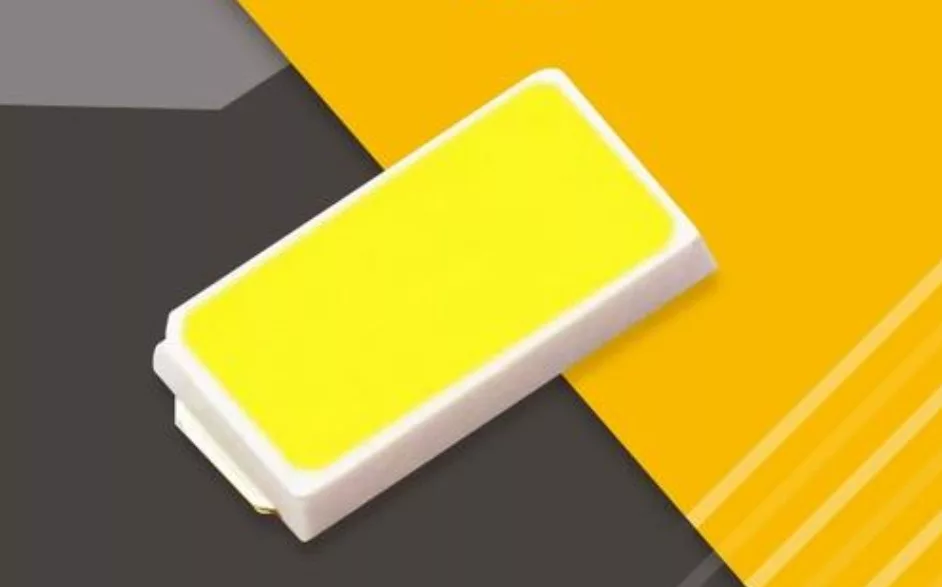 5730 Lamp Bead 0.5w
Before we dive into the specifics of 5630 and 5730 LED strips, let’s get a handle on the fundamentals. What exactly are LED strip lights?
Imagine a flexible ribbon embedded with tiny light-emitting diodes (LEDs). That’s an LED strip light in a nutshell. These strips are backed with adhesive, making them easy to stick onto almost any surface. They’re a game-changer compared to traditional lighting because they’re:
Energy-Efficient: LEDs use a fraction of the energy of incandescent bulbs, saving you money on your electricity bill.
Flexible: Bend and shape them to fit any contour, unleashing your creativity.
Long-Lasting: LEDs can last for tens of thousands of hours, meaning less hassle with replacements.
SMD Technology: The Heart of LED Strips
The magic behind LED strip lights lies in SMD technology. SMD stands for Surface Mounted Device, and it refers to the way the LEDs are mounted directly onto the strip’s printed circuit board (PCB). The size of the SMDs is indicated by a four-digit number (e.g., 3528, 5050).
3528 LEDs: These are the smallest and least bright, often used for accent lighting.
5050 LEDs: Brighter than 3528s, they contain three LEDs in one package and are great for general lighting.
5630 and 5730 LEDs: These are the big players. They offer high brightness and efficiency. They are perfect for task lighting or areas where you need a lot of light.
Ready to compare the 5630 and 5730 head-to-head? Let’s move on!
5630 vs. 5730 LED Strip Lights: A Head-to-Head Comparison
Now that we’ve got the basics down, let’s shine a spotlight on the stars of the show: 5630 and 5730 LED strip lights. What sets them apart, and which one is right for you?
Technical Specifications: The Nitty-Gritty Details
Let’s start with the cold, hard facts. Here’s a quick comparison of the technical specs for these two LED titans:
| Specification | 5630 LED Strip | 5730 LED Strip |
|---|---|---|
| Size | 5.6mm x 3.0mm | 5.7mm x 3.0mm |
| Brightness | 45-50 lumens | 55-60 lumens |
| Power Consumption | ~150mA per LED | ~300mA per LED |
| Voltage | 3.3-3.4V | 3.3-3.4V |
| Luminous Efficacy | 100-120 lumens/watt | 90-110 lumens/watt |
| Color Temperature | 2700K-6500K | 2700K-6500K |
| CRI (Color Rendering Index) | >80 | >80 |
| Lifespan | 50,000 hours | 50,000 hours |
| Dimmable | Yes | Yes |
| Typical Applications | General lighting, accent lighting | Task lighting, high-brightness applications |
| Energy Efficiency | Higher | Lower |
| Cost | Generally lower | Generally higher |
| Common Uses | Homes, restaurants, offices, retail stores | Retail displays, jewelry cases, under-cabinet lighting |
| IP Rating (Optional) | IP20, IP65, IP67 (varies by product) | IP20, IP65, IP67 (varies by product) |
| Heat Management | Lower heat generation | Higher heat generation |
As you can see, the differences are subtle. The 5730 is just a hair larger, and it can be a bit brighter. However, the 5630 is often more energy-efficient, meaning it uses less power to produce the same amount of light.
Performance Differences: Brightness and Efficiency
In the real world, the brightness difference between 5630 and 5730 LED strips isn’t always noticeable. Unless you’re comparing them side-by-side, you might not even be able to tell which is which. However, if you need the absolute maximum brightness, the 5730 might have a slight edge.
When it comes to efficiency, the 5630 often takes the crown. It typically produces more lumens per watt of power consumed than the 5730. This means you can get the same amount of light for less energy, which is great for your wallet and the environment.
Cost Considerations: Price vs. Long-Term Value
5630 LED strips are generally more affordable than 5730 strips. However, it’s important to consider the long-term costs. The 5630’s energy efficiency can lead to significant savings on your electricity bill over time. Plus, LED lights have a long lifespan, so you won’t have to replace them as often as traditional bulbs.
So, while the 5730 might have a higher upfront cost, the 5630 could be a better investment in the long run.
Choosing the Right LED Strip for Your Project
Alright, let’s get down to business! How do you choose the perfect LED strip for your specific project? It all boils down to understanding your lighting needs and the environment where the lights will be installed.
Lighting Needs Assessment: Brightness, Color, and Accuracy
Brightness Requirements: The first step is to figure out how much light you actually need. This is measured in lux, which is the amount of light that falls on a surface. Different spaces have different lux requirements. For example, a kitchen might need 500 lux, while a living room might be comfortable with 100-200 lux. You can use online calculators or consult a lighting professional to determine the ideal lux level for your project.
Color Temperature: LED strips come in a range of color temperatures, from warm white (2700K) to cool white (6500K), with advanced models supporting CCT adjustable color temperature options. Warm white creates a cozy, inviting atmosphere, while cool white is more energizing and better for task lighting. Neutral white (4000K) is a good middle ground. Consider the mood you want to create in your space when choosing a color temperature.
CRI (Color Rendering Index): This is a measure of how accurately a light source renders colors. The higher the CRI, the more natural colors will appear. For most applications, a CRI of 80 or higher is recommended.
Environmental Factors: Indoor vs. Outdoor, Temperature, and More
Indoor vs. Outdoor: If your LED strip will be exposed to the elements, you’ll need one with a high Ingress Protection (IP) rating. This rating indicates how well the strip is protected against dust and moisture. IP65 strips are dust-tight and protected against water jets, while IP67 strips are fully submersible.
Temperature Considerations: LED strips have a specific operating temperature range. Make sure the strip you choose can handle the temperatures in your installation location.
Case Studies: Real-World Examples
Let’s take a look at a few real-world examples to see how 5630 and 5730 LED strips can be used effectively:
Home Lighting: In a living room, 5630 LED strips can be used to create a warm and inviting ambiance. They can be installed under cabinets, behind TVs, or along crown molding to add a touch of elegance. In a kitchen, 5730 LED strips can provide bright task lighting under cabinets, making it easier to see what you’re doing while cooking.
Commercial Lighting: In retail stores, 5730 LED strips can be used to highlight products and create an eye-catching display. In restaurants, 5630 LED strips can be used to create a cozy and intimate atmosphere.

 Led Strips