Contents
1. What One-Button Switching Actually Has to Solve
2. Why the Four Modes Pull in Different Directions
3. What the Standard Actually Requires of the Control System
4. What Changes Between the Modes
5. One Installation, Several Optical Zones
6. The Control Layer: Presets, Protocols and Commissioning
1. What One-Button Switching Actually Has to Solve
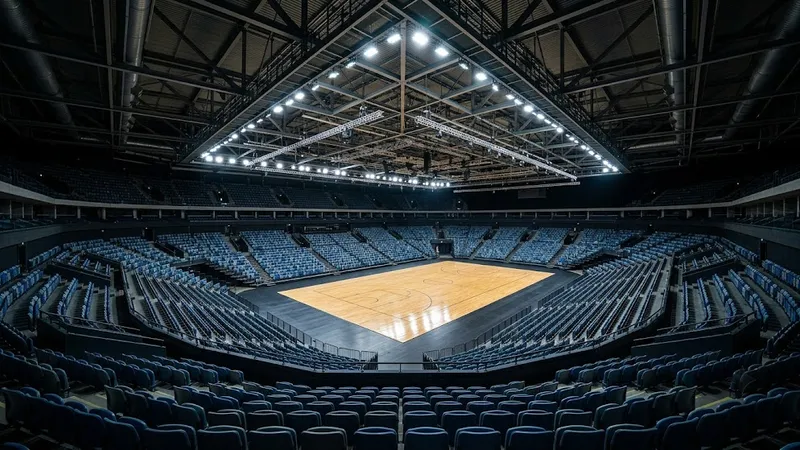
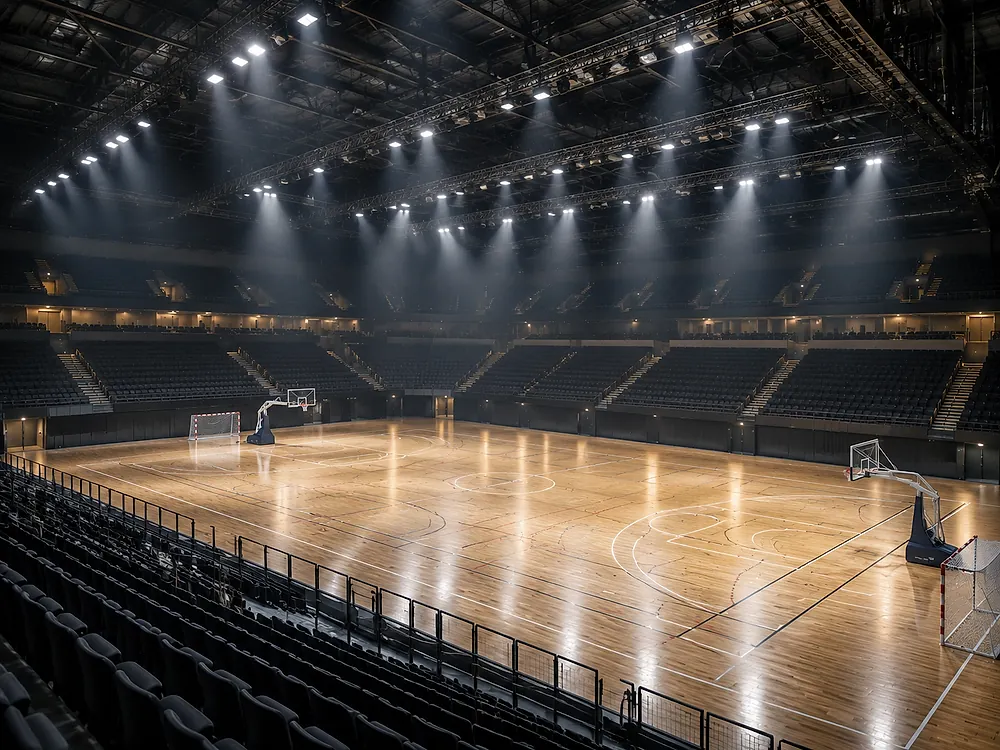
Picture an indoor hall. On Tuesday it hosts badminton training, on Thursday a volleyball match, on Saturday a televised basketball game, and on Sunday a concert. The client asks why the lights cannot switch between four scenes. The controller is not the hard part. The four activities want different light, in different directions, at different heights.
A multi-purpose arena is judged by its worst glare case and its brightest case at the same time. Badminton pushes players to track a shuttle almost straight up. Volleyball needs free height above the court and even light across the net plane. Basketball adds camera-facing vertical illuminance once the game is televised. A concert inverts the list, because the house goes dark while the egress routes must not.
2. Why the Four Modes Pull in Different Directions
The conflicts are geometric, not electrical. Badminton is played with a small shuttle tracked against the ceiling, so sources must stay out of the player's upward field of view. Volleyball states its own figures: free space at least 7 m high, rising to 12.5 m at world and official competitions, and a lighting clause of at least 300 lx generally and 2000 lx at those competitions, measured 1 m up. Basketball rewards light aimed toward the side, where the cameras sit.
That is why one layout rarely serves all four. A ring installed for even basketball uniformity can put a bright aperture straight into a badminton player's sightline, and a side-line layout tuned to keep sources away from those players can leave a basketball court short of vertical light. The strategy therefore starts at the luminaire and the aiming plan.
3. What the Standard Actually Requires of the Control System
The most concrete requirement for a convertible hall in China is not about lux. JGJ 153-2016 asks for exactly this strategy: the central control system shall preset scene schemes covering competition, training, fitness and maintenance for the different sports, and venues at grade IV and above shall have central control. Group control of competition luminaires, an open protocol and a manual override are required.
Two more clauses shape the electrical design. Where emergency lighting doubles as normal lighting, its circuit and its control switch must be installed separately. After a power failure the system must return to the previous or default scene.
For event mode the standard fixes the life-safety floor: safety lighting in spectator and playing areas shall be at least 20 lx on average, and escape lighting at exits at least 5 lx. For badminton it requires the background surface to give the shuttle adequate contrast.
4. What Changes Between the Modes
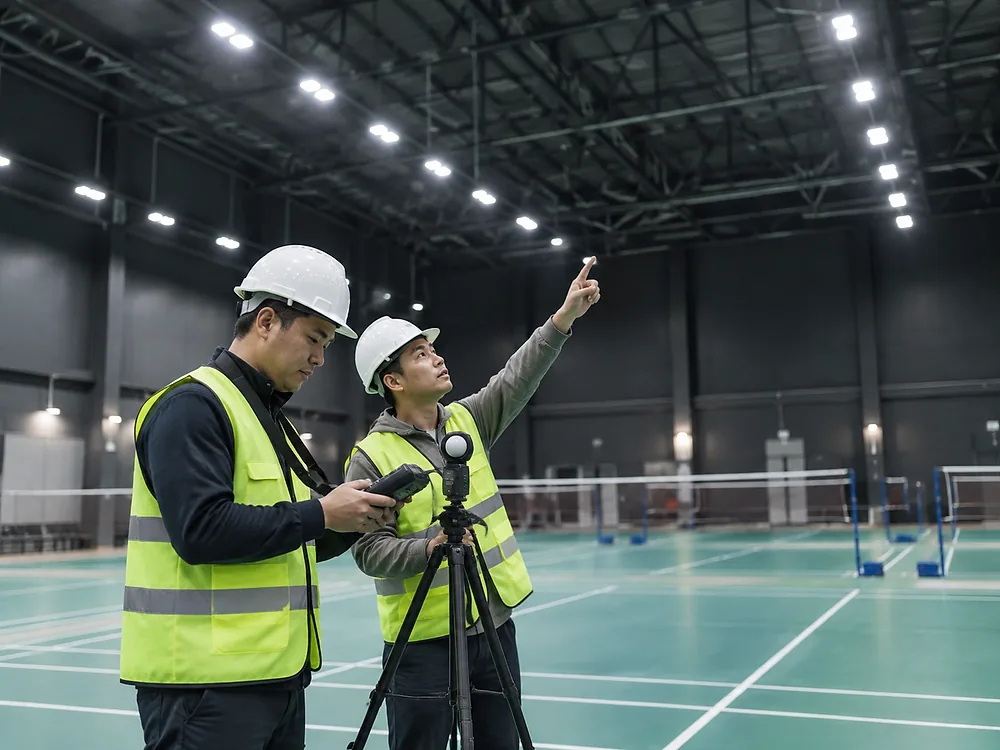
A preset is not one number. Each mode is defined by the sport's own rule or by the standard the hall is inspected against, and those documents do not share measurement conditions. Convertible halls are designed to the binding sport rather than the common booking. JGJ 153-2016 puts the horizontal plane at floor level and the vertical plane at 1.5 m, while the volleyball rule measures at 1 m.
| Mode | Governing document | Illuminance | Uniformity | Glare, colour and safety |
|---|---|---|---|---|
| Basketball, televised | GB/T 50034-2024 sports building tables; JGJ 153-2016 grade system | Table values are the maintained illuminance in the direction of the main camera, except shooting and archery | With TV: horizontal min/max ≥ 0.5, min/avg ≥ 0.7; main-camera vertical 0.4 / 0.6 | JGJ 153-2016: HDTV main-camera vertical ≥ 1800 lx; flicker ratio ≤ 6 %; CCT 3000–6000 K |
| Volleyball | Playing rules, Rule 1.1 dimensions and Rule 1.6 lighting | ≥ 300 lx generally, and ≥ 2000 lx for world and official competitions, measured 1 m above the floor | Not stated by the rule; grade-dependent under JGJ 153-2016 | Free space ≥ 7 m high, ≥ 12.5 m for world and official competitions; the lighting clause sets no uniformity, glare or colour value; GR ≤ 50 under JGJ 153-2016 |
| Badminton | JGJ 153-2016 badminton clauses, plus federation and design-guidance practice | No first-party lux figure was verified; a lighting supplier's guidance quotes roughly 750–1000 lx broadcast and about 500 lx training | Supplier guidance quotes U1 ≥ 0.70 and U2 ≥ 0.60; not verified against a federation document | JGJ 153-2016: the background colour and reflectance shall give the shuttle sufficient contrast; GR ≤ 50 |
| Concert / event | JGJ 153-2016 mandatory life-safety clauses | House level is a design choice; no standard fixes it | Not a uniformity case | Safety lighting ≥ 20 lx; escape lighting ≥ 5 lx; separate circuit and separate control switch |
| Any mode (control) | JGJ 153-2016 clause on lighting control | Preset scenes for competition, training, fitness and maintenance | Group control of all competition luminaires | Open protocol and manual override required; scene restored after a power failure |
| Built example | Ocean University of China gymnasium, Grade IV to Grade V rebuild | 180 luminaires on an annular catwalk at the original mounting positions | Verified per-scene by the contractor; values not published | Eight stored scenes with one-key switching and zonal dimming; 43 % power saving reported |
Three habits keep the comparison usable. Name the rule behind each mode. Keep the measurement plane attached to every value. And separate binding documents from advisory ones, since the CIE guide for televised sports lighting states that its information is advisory, not mandatory. Build in the 0.80 maintenance factor that JGJ 153-2016 sets indoors.
5. One Installation, Several Optical Zones
A verified CPS project shows the pattern. Ocean University of China rebuilt a Grade IV gymnasium to Grade V with 180 luminaires on an annular catwalk at the original mounting positions, and commissioned eight stored scenes with one-key switching and zonal dimming, from emergency and cleaning through amateur and professional competition to two broadcast levels and conference.
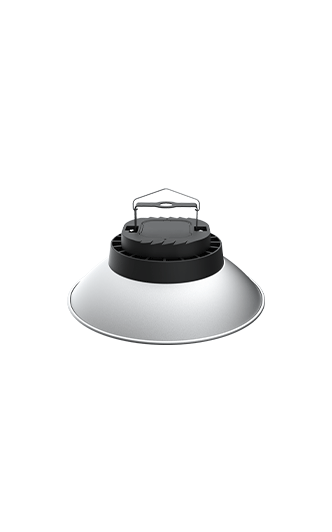
The logic scales both ways. Fixtures are grouped by the surface they serve, so each group carries its own aiming record and dimming range, and a sport scene is assembled from those groups. A zone serving two sports in the same week needs field-selectable optics or a documented re-aiming procedure, as in halls running basketball and badminton in one building.
6. The Control Layer: Presets, Protocols and Commissioning
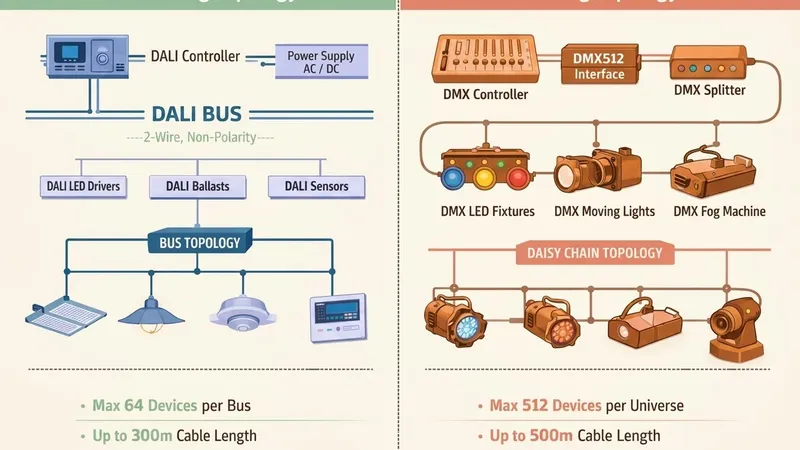
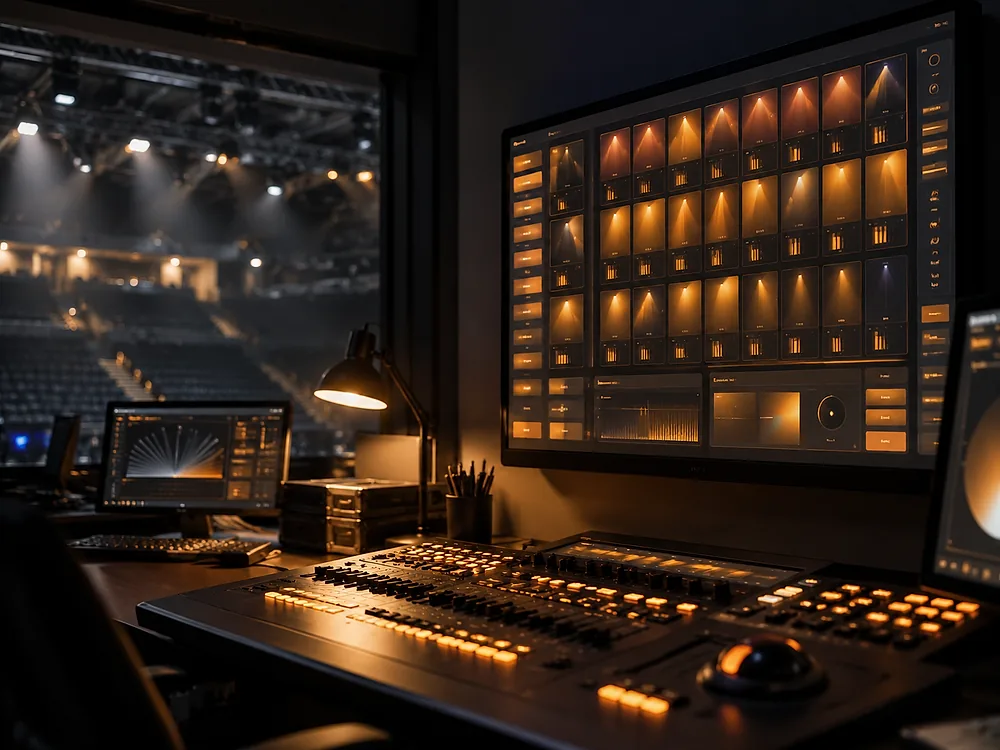
The controller does not change the photometry. A preset is a stored table of output levels, plus a colour temperature on tunable fixtures, calculated and then measured for that sport. CPS guidance on the protocols divides them by character: DALI-2 is bidirectional and suited to zoning and fault reporting, with 64 control gear and 64 control devices per subnet, while DMX512 is unidirectional with 512 channels per universe and suits fast cue changes. A hybrid venue runs DALI-2 as master and bridges DMX beneath it.
Commissioning matters more than the protocol choice. What makes a scene button trustworthy is that each stored scene was verified on site against the model it came from, so the volleyball preset produces the light the specification asks for. A hall that changes use twice a day needs presets reachable from a panel, a schedule or the management system.
7. Event Mode, Power and Handover
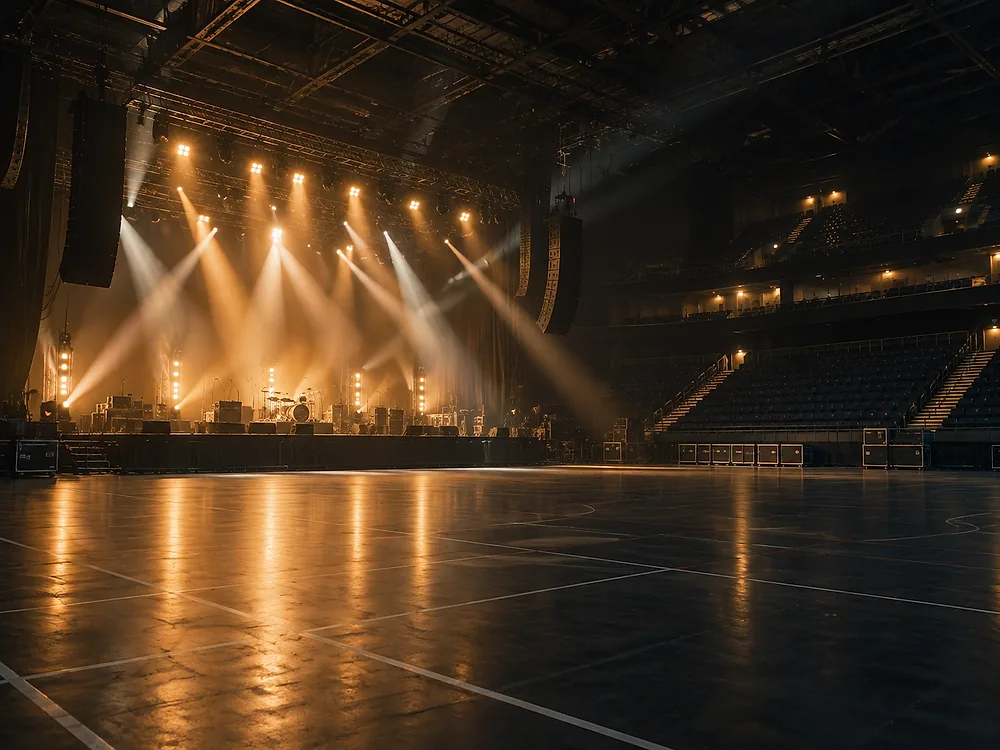
Concert mode reverses sport mode. House lighting drops to a warm, low level, the touring rig takes the stage, and the working light for load-in becomes a separate scene. The safety circuit stays where the standard put it: its own circuit and switch, at 20 lx in use and 5 lx on escape routes.
Power is the second half of event mode. The fixed house system and any temporary production distribution have to be load-matched so one does not trip the other mid-show.
The handover pack is what the venue keeps: the scene list, the target values behind each scene, the aiming records, and the measured result per mode, as in the CPS badminton hall case, where a Grade III venue was renovated with 102 luminaires instead of 132. Because the standard requires a mode's luminaires to be lit for its test, acceptance is per scene.
8. Technical Sources
JGJ 153-2016, Design and Testing Standard for Sports Venue Lighting — Chinese industry standard for sports venue lighting design and testing, issued 2016, in force since June 2017. Source of the clauses cited here: the requirement for a central control system with preset scene schemes for the different sports, group control of competition luminaires, an open communication protocol and a manual override; the clause requiring a separate circuit and a separate control switch where emergency lighting doubles as normal lighting; the mandatory safety figures of 20 lx and 5 lx; GR ≤ 50; the 0.80 indoor maintenance factor; and the testing requirement that the corresponding luminaires be lit for the mode under test. Reproduced clause text.
GB/T 50034-2024, Standard for Lighting Design of Buildings — Chinese national standard, published March 2024 and in force since 1 August 2024, replacing GB 50034-2013. The ministry notice is first-party; the clause text is read through a full-text reproduction. Cited for the note that the sports building table values are the maintained illuminance in the direction of the main camera except for shooting and archery, for the with-television uniformity ratios, and for the scene-control and restore-scene-on-restart clauses. Its illuminance tables are published as images and are not reproduced here.
FIVB Official Volleyball Rules, Rule 1.1 dimensions and Rule 1.6 lighting — The federation's own rules hub, which links the current rulebook. The clause reads as two layers: the rule body gives a general requirement of not less than 300 lx, and a footnote raises it to not less than 2000 lx on the playing area for FIVB world and official competitions, measured 1 m above the surface. Those figures and the Rule 1.1 free-space dimensions of 7 m generally and 12.5 m for world and official competitions were verified through national-federation reproductions of the rulebook (Norwegian and Russian official translations) because the English PDF could not be opened in this session. An earlier footnote value of 1000 to 1500 lx is superseded. The clause sets no uniformity, glare, colour or ceiling requirement for volleyball.
CPS Lighting: How to Design Lights for Multi-Purpose Arena Lighting — CPS Lighting engineering guidance, 23 July 2026, covering one hall serving basketball, volleyball, badminton, concerts and esports. Source of the named stored presets and of the badminton figures quoted here as supplier guidance, together with the note that badminton is treated as the binding case when a hall is designed for multiple sports. These are a supplier's published engineering position, not a federation requirement.
CPS Lighting: DMX512 and DALI-2 Intelligent Control Systems in Sports Lighting Engineering — CPS Lighting technical article, 14 August 2026. Source of the protocol comparison used here: DMX512 as a unidirectional system with 512 channels per universe on shielded twisted-pair cable with 120 ohm termination, DALI-2 as a bidirectional regulated protocol with device-type profiles, and the hybrid rule that DMX sub-systems sit under a DALI-2 master rather than the reverse.
DALI Alliance: key features and IEC 62386 — The protocol owner's own site, used to check the addressing and scene claims made about DALI. It states a maximum of 64 control gear plus 64 control devices per subnet and 16 scenes per item of control gear, and describes DALI-2 as a certification programme with independently verified test results. It does not state a group count, so no group count is quoted here.
CPS Lighting case: gymnasium lighting renovation at Ocean University of China — Verified project record for a Grade IV to Grade V gymnasium rebuild: 180 luminaires on an annular catwalk at the original mounting positions, and eight commissioned scene modes with one-key switching and zonal dimming. The scene list and swap strategy come from this page; the project figures apply to that venue only.
CPS Lighting case: Yunhe County Gymnasium, basketball, volleyball and badminton — Verified project record for a Grade III hall that hosts basketball, volleyball and badminton with one-key switching between emergency, entertainment, amateur and professional competition modes, and third-party photometric testing. This is the only CPS case in this set that names volleyball as a hosted sport.
CPS Lighting case: badminton hall Grade III indoor lighting retrofit — Verified project record used for the handover point: a Grade III badminton hall renovated with 102 luminaires in place of 132 older units, with the optical design aimed at cutting direct glare and stray light. Results apply to that venue.
CPS Lighting laboratory and service pages — First-party description of in-house photometric and reliability testing equipment, and of the DIALux and AGi32 simulation support offered through the service page. Used only to state what the manufacturer says it tests and simulates; no accreditation claim is made here.
CIE 083:2019, Guide for the Lighting of Sports Events for Colour Television and Film Systems, 3rd edition — International Commission on Illumination, 2019, superseding CIE 083-1989. Referenced here for its status rather than its values: the CIE catalogue entry states that the information it provides is advisory and not mandatory. Its contents are paywalled and are not reproduced in this article.
Core Keywords: multi-purpose arena lighting, illuminance switching, scene presets, badminton lighting, volleyball lighting, sports lighting control, arena concert lighting, glare control