
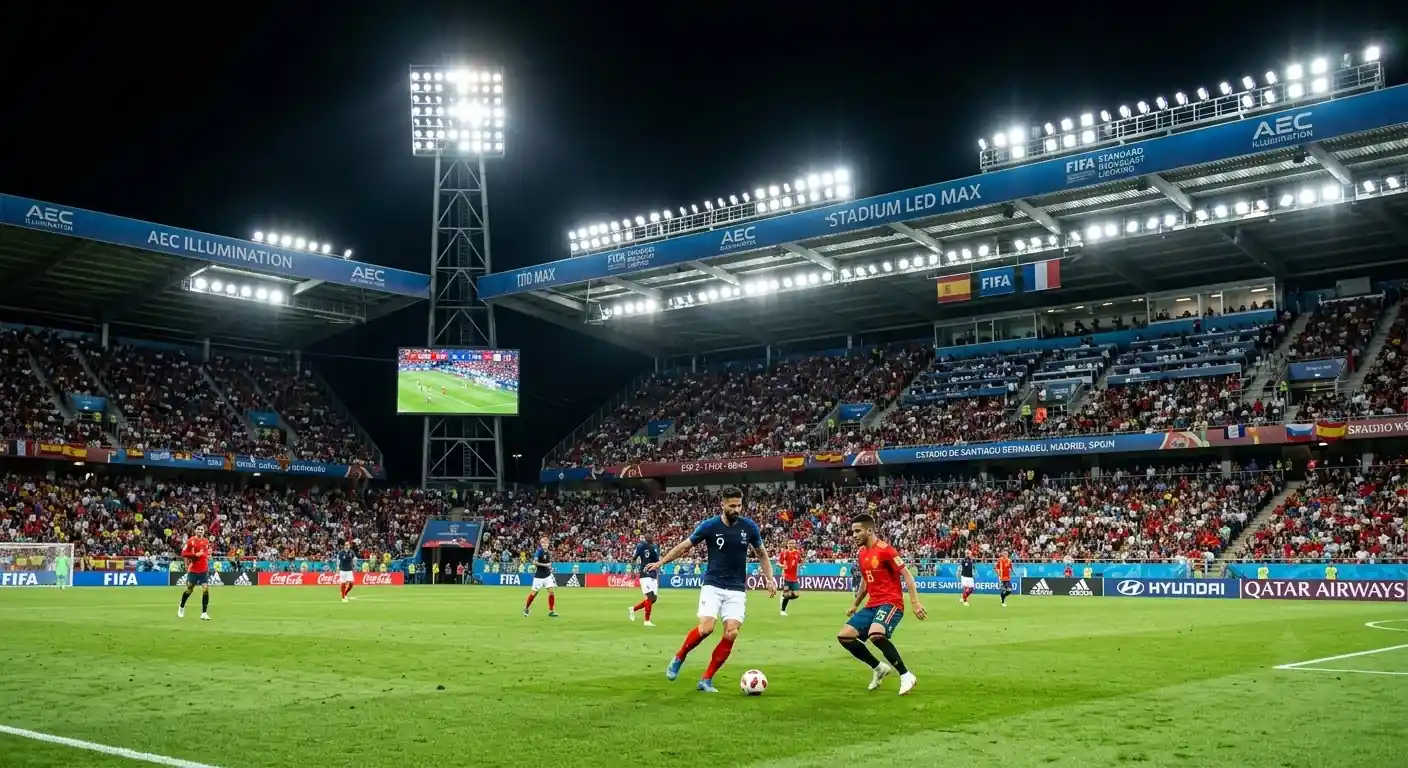
 An elite football stadium illuminated to FIFA Class A standards
Securing a contract for a major football stadium requires more than just installing bright floodlights. For international Engineering, Procurement, and Construction (EPC) companies, a successful stadium bid hinges on strict compliance with FIFA Standard Lighting protocols. Whether you are building an elite arena for international broadcasts or upgrading a regional club’s training pitch, understanding the FIFA certification tiers is the key to minimizing project risk and ensuring seamless final commissioning.
Partnering with a specialized sports lighting manufacturer allows EPC contractors to leverage precise optical engineering, structural reliability, and comprehensive photometric data to pass FIFA certification on the very first field test.
This technical guide breaks down the complex FIFA lighting requirements into an easy-to-navigate blueprint. We will explore the photometric differences between certification classes, critical broadcast metrics, and the mechanical engineering standards your LED Stadium Light systems must meet.
1. Decoding FIFA Lighting Classes (A, B, C, D)
FIFA’s lighting guidelines categorise stadiums based primarily on their broadcasting requirements and the level of competition. Accurately matching your equipment to the specific class prevents massive budget overruns (by over-specifying) or costly post-installation failures (by under-specifying).
1.1 Class A: Elite Competitions & Ultra HD Broadcasts
Class A is the pinnacle of football stadium lighting, reserved for World Cup finals, continental championships, and top-tier premier leagues. The entire system is engineered for 4K/8K Ultra HD Broadcast Light requirements.
Lux Requirements: Horizontal illuminance commonly exceeds 1500 to 2000 lux. Vertical illuminance toward the main cameras must maintain an average of at least 1500 lux to guarantee flawless television imaging.
Uniformity: Exceptional uniformity is mandated. The U1 ratio (Min/Avg) must be ≥ 0.70, ensuring there are absolutely no shadowy patches on the grass.
1.2 Class B: National & Regional Televised Matches
Class B applies to professional domestic leagues and regional tournaments where standard high-definition (HD) television coverage is utilized.
These stadiums generally require a horizontal lux level of around 1000 to 1200 lux, with vertical camera illuminance between 1000 and 1200 lux. While slightly less demanding than Class A, achieving Class B certification still heavily relies on specifying genuine Broadcast Grade Lighting to prevent camera flicker and maintain true color rendering.
1.3 Class C & D: Non-Televised Club and Training Fields
Classes C and D are focused entirely on player visibility rather than camera requirements.
Class C (Local Club/Amateur): Requires around 500 lux for non-televised, standard competitive matches.
Class D (Training/Recreational): Requires approximately 200 to 300 lux. It provides safe visual conditions for community play and professional training sessions.
2. Core Photometric Metrics EPCs Must Know
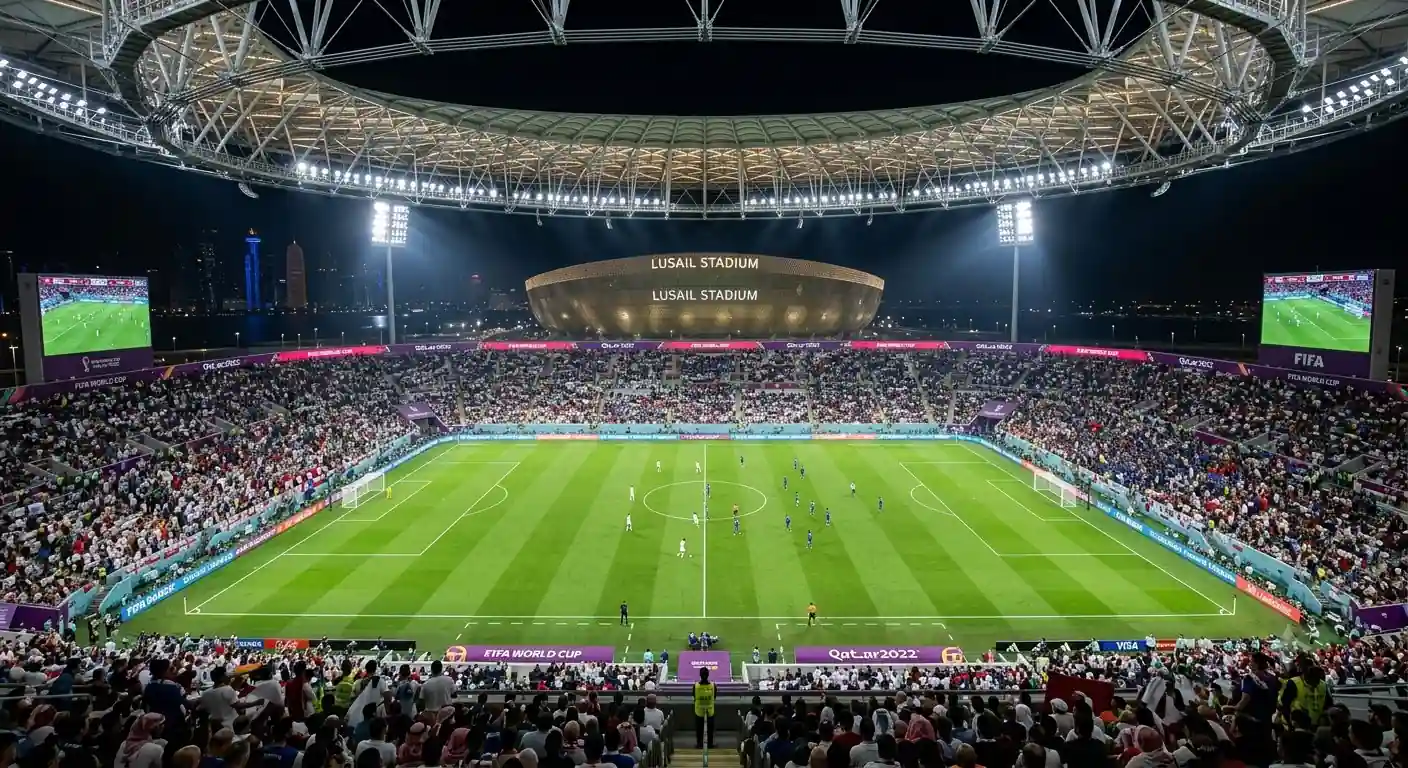 Precision optical lenses are crucial for managing vertical illuminance and glare restriction across the pitch.
To pass a final on-site pitch test, independent engineers will measure the field using precise photometric meters. If your chosen Integrated Stadium Light fails these metrics, your firm is liable for costly retrofits.
2.1 Horizontal vs. Vertical Illuminance (Eh & Ev)
Horizontal Illuminance (Eh): This is the light that falls flat onto the turf. It determines the overall brightness of the field for the players and spectators in the stands.
Vertical Illuminance (Ev): This is the light hitting the vertical planes—namely, the players' bodies and faces. FIFA mandates strict Ev measurements taken at 1.5 meters above the ground, pointed toward the primary broadcast cameras. Without sufficient Ev, players look like dark silhouettes on television.
2.2 Uniformity (U1/U2) and GR Glare Rating Limits
A football field must not have "zebra stripes" (alternating light and dark patches). FIFA measures uniformity via U1 (Minimum/Average) and U2 (Minimum/Maximum).
Equally critical is the GR Glare Rating. A high GR score means the light is blinding the goalkeeper during a corner kick or temporarily blinding a striker looking up for a cross. Professional LED sports lights utilize patented Total Internal Reflection (TIR) optic structures and anti-glare visors to keep the GR strictly under 50.
2.3 Broadcast Specs: CRI, TLCI, and Flicker-Free Systems
For Class A and B venues, the electronics driving the LEDs are just as important as the diodes themselves.
CRI & TLCI: A Color Rendering Index (CRI) of ≥ 90 and a Television Lighting Consistency Index (TLCI) of ≥ 85 are mandatory. This ensures team kits, referee cards, and the grass are broadcasted in vivid, true-to-life colors.
Flicker-Free Technology: High-speed slow-motion cameras will capture rapid strobing if cheap power supplies are used. Specifying Slow Motion Compatible Illumination (Ripple factor < 1%) guarantees smooth, flicker-free broadcast replays.
3. Structural and Mechanical Engineering Requirements
An EPC contractor must not only deliver optical compliance but also ensure absolute structural safety and system longevity.
3.1 Optimizing High Mast Placement and Aiming Vectors
The physical placement of poles dramatically affects lighting geometry. FIFA specifically prohibits placing light poles in the "forbidden zones" behind the goals to prevent blinding attackers and goalkeepers.
For optimal high mast sports light installations (whether it’s a 4-pole, 6-pole, or architectural roof-rim layout), using precise asymmetric forward-throw optics allows the luminaires to project light across the pitch while keeping the fixture face aerodynamic and level.
3.2 High Luminous Efficacy and Thermal Dissipation
To limit the weight and wind load on stadium roof structures, modern systems must deliver High Luminous Efficacy (≥130lm/W). This allows contractors to achieve higher lux levels using fewer fixtures.
Furthermore, high-wattage LED systems require serious thermal management. Die-cast Aluminum Heat Sinks with open aerodynamic fin structures keep junction temperatures low, ensuring the system maintains a 50,000+ hour service life with minimal lumen depreciation. Combined with an IP66/IP67 Waterproof rating and a highly corrosive-resistant C4/C5 marine-grade coating, the installation is protected against extreme weather, protecting the EPC's warranty obligations.
4. The Certification & Bidding Process
Winning a turnkey stadium project means proving compliance before a single shovel hits the ground.
4.1 Using DIALux Lighting Simulations to Secure Bids
Partnering with a professional sports lighting supplier capable of delivering an advanced DIALux Lighting Simulation is crucial. This software generates a 3D digital twin of the stadium.
The simulation report outputs a detailed grid of horizontal and vertical illuminance, uniformity calculations, and exact XYZ aiming coordinates for every single fixture. Incorporating this comprehensive engineering report into your tender significantly increases the credibility and technical score of your bid.
4.2 Essential Global Certifications (CE, CB, UL, IP66)
A true Turnkey Lighting Project relies on certified components. Ensure that the selected fixtures carry valid test reports from recognized third-party labs. Depending on the project region, CE Certification (Europe), UL Certification (North America), CB Certification (Global), and SAA Certification (Australia) are mandatory thresholds to pass the municipal procurement process.
5. Conclusion
Navigating the FIFA Football Field Lighting Certification requires a deep understanding of optical engineering, structural dynamics, and broadcast technology. For international EPC contractors, specifying the correct class (A through D) and utilizing advanced DIALux simulations are the most effective ways to manage CAPEX while ensuring guaranteed on-site compliance.
By aligning with a reputable OEM/ODM sports lighting manufacturer, your engineering teams gain access to the specialized optics, thermal management, and technical documentation required to deliver a world-class, FIFA-certified arena.
Core Keywords: FIFA Standard Lighting, LED Stadium Light, Broadcast Grade Lighting, Sports Lighting Manufacturer, DIALux Lighting Simulation, GR Glare Rating, High Luminous Efficacy