
Imagine a sudden, violent rainstorm hitting an outdoor stadium right in the middle of a championship football match. The players play on, but high above the field, the lighting system is suddenly subjected to heavy winds, flying debris, and torrential water. While surviving the physical impacts of such a storm—or a stray ball—requires a robust mechanical enclosure (a topic we cover extensively in our guide on IK Rating for LED lights), preventing water and microscopic dust from short-circuiting the electronics is an entirely different engineering challenge. This invisible shield against the elements is defined by the fixture's Ingress Protection, or IP rating.
Decoding the Numbers Behind Weather Resistance
At its core, the IP rating system (defined by the IEC 60529 standard) removes the guesswork from a fixture's weatherproofing capabilities. It uses a simple two-digit format: the first digit measures the defense against solid foreign objects like dirt and dust (on a scale of 0 to 6), while the second digit evaluates liquid resistance (scaling from 0 to 8). For a dedicated sports lighting manufacturer, anything less than a "6" for the first digit—meaning absolutely dust-tight—is unacceptable for outdoor environments. The real variable lies in the second digit, which dictates exactly how much water the luminaire can handle before internal components begin to fail.
| IP Rating | Solid Protection (First Digit) | Liquid Protection (Second Digit) | Typical Lighting Scenarios |
| IP65 | Fully Dust-Tight | Resists low-pressure water jets from any direction. | Standard outdoor tennis courts, local community fields, general area lighting. |
| IP66 | Fully Dust-Tight | Resists powerful, high-pressure water jets and heavy seas. | Professional stadium high-mast lighting, coastal sports venues, harsh weather zones. |
| IP67 | Fully Dust-Tight | Survives temporary immersion in water (up to 1 meter). | Specialized ground-level architectural lighting, extreme flood-prone arenas. |
The Hidden Threat: Thermal Cycling and Moisture
Knowing these numbers is only the first step. Understanding how water actually breaches a seemingly sealed fixture requires a deeper look at operating conditions. High-power LED lights generate significant heat during operation. As the internal temperature rises, the air inside the casing expands. When the lights are turned off after a match—often in the cool night air—the sudden drop in temperature causes that internal air to contract rapidly. This creates a "vacuum effect" capable of pulling outside moisture past standard rubber seals, eventually leading to lens condensation. This trapped moisture not only corrodes sensitive PCB boards but also acts as a refractive barrier, severely degrading the lumen output and throwing off the carefully calibrated optics of the stadium lights.
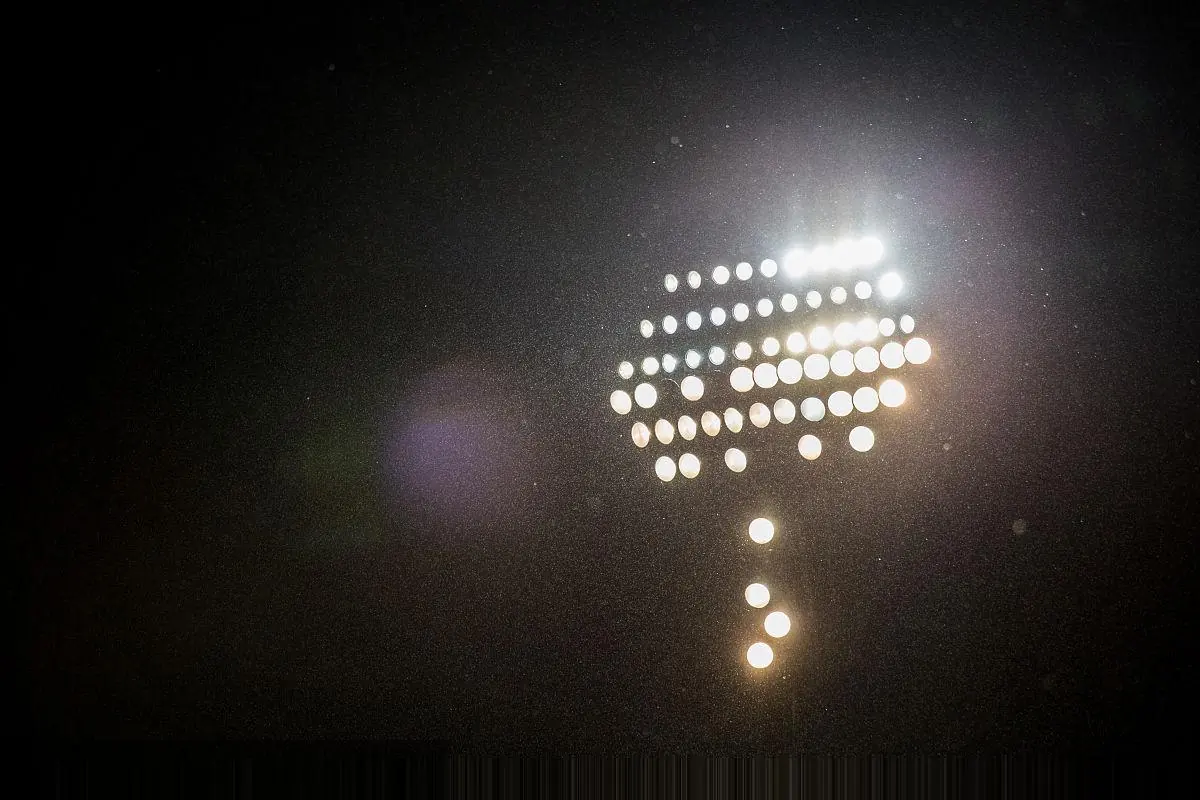 Outdoor Stadium Light needs High Level IP Rating
To combat this structural challenge achieving a true IP66 rating involves more than just tight screws. It requires advanced materials like UV-resistant silicone gaskets that maintain their memory and elasticity over years of thermal abuse. More importantly, top-tier fixtures integrate waterproof pressure-equalization valves. These specialized breathers allow the fixture to continuously balance internal and external air pressure, completely neutralizing the vacuum effect while actively blocking liquid water and dust particles from entering.
Validating Endurance Through Lab Testing
Because of these complex thermal dynamics, relying on basic factory sealing is a risk no project manager should take. Validating a fixture's true weather resistance demands aggressive laboratory simulation. For instance, to earn an IP65 or IP66 badge, a luminaire is placed in a vacuum chamber circulating fine talcum powder for hours to test for dust ingress. Following that, it faces oscillating spray tubes or concentrated high-pressure water jets mimicking hurricane-force rain. In CPS Lighting's own laboratory, we subject our sports fixtures to these exact extremes, alongside accelerated thermal shock testing. This ensures that the sealing integrity remains uncompromised long after the warranty period begins, giving facility owners peace of mind.
 LED sports lighting fixture undergoing high-pressure water
Selecting the Right Protection for Your Project
How these rigorous test results translate to your venue depends entirely on your project's geography and layout. An indoor basketball arena might only require a minimal IP rating to keep dust off the LED chips. Conversely, if you are designing a lighting layout for an outdoor football pitch, IP65 is the absolute baseline. Taking it a step further, coastal facilities bombarded by salt fog, or high-mast installations that undergo aggressive high-pressure washing for maintenance, require the robust defense of an IP66 rating coupled with anti-corrosion treatments. Evaluating your specific environmental risks upfront ensures you specify a lighting system that delivers uninterrupted brilliance, year after year, regardless of what the forecast holds.
To see how our high-IP-rated fixtures perform in real-world extreme conditions, check out our recent sports lighting projects.