Contents
1. Design for Breath and Posture, Not Retail Brightness
2. Set a Low, Layered Illuminance Plan
3. High CRI Supports Accurate Cues and Materials
4. Flicker-Free Starts at the Driver and Dimmer
5. Control Glare, CCT, and Reflected Light
6. Check the Product and Control System Together
1.Design for Breath and Posture, Not Retail Brightness
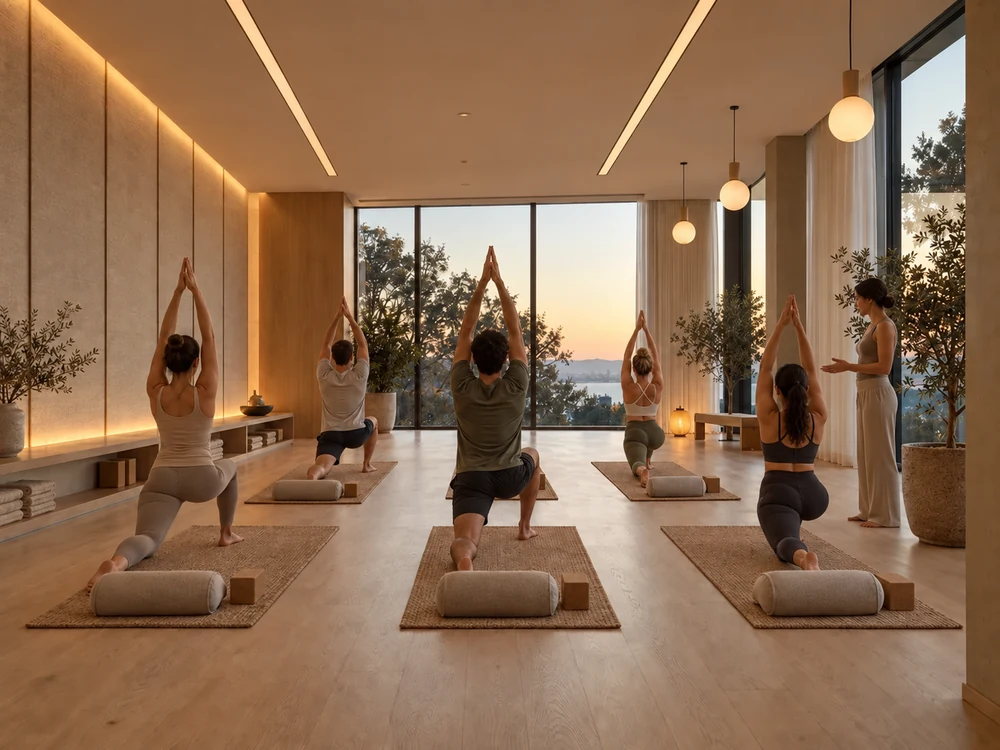
Picture the first five minutes of a slow evening class. Clients enter from a bright street, set down their shoes, and look for a mat without feeling exposed. A studio that uses retail-level brightness everywhere can feel flat and tense. A useful yoga studio lighting plan gives people enough light to move safely, while letting the room stay quiet and settled.
The brief should begin with the real sequence of use: arrival, equipment setup, instructor demonstration, the class itself, cleaning, and closing. Yoga studio lighting and Pilates studio lighting do not need one fixed lux value for every minute. They need zones, scenes, and smooth dimming that help staff see posture, springs, steps, and floor edges when it matters.
2.Set a Low, Layered Illuminance Plan
That sequence leads to a layered low-lux lighting plan for yoga and Pilates studios. Ambient light makes the room legible. Local light helps an instructor check alignment and equipment. Accent light can define a wall or reception point, but it should not become a bright source in a participant’s direct view. Start with maintained illuminance, then test the scene at the actual dimming levels.
The following bands are project starting points, not a substitute for local code, accessibility rules, or a task review. A brighter cleaning scene can run only when the room is empty. This gives operators a calm class scene without reducing the light needed for safer setup and maintenance.
3.High CRI Supports Accurate Cues and Materials
Illuminance alone does not show how a room looks. Color rendering affects skin tones, timber, cork blocks, towels, resistance bands, and the instructor’s visual cues. For yoga studio lighting where close observation matters, a high CRI lighting brief should normally ask for Ra ≥ 90 and review the spectral data when appearance is important. R9 can also be useful because it gives extra information about strong red rendering.
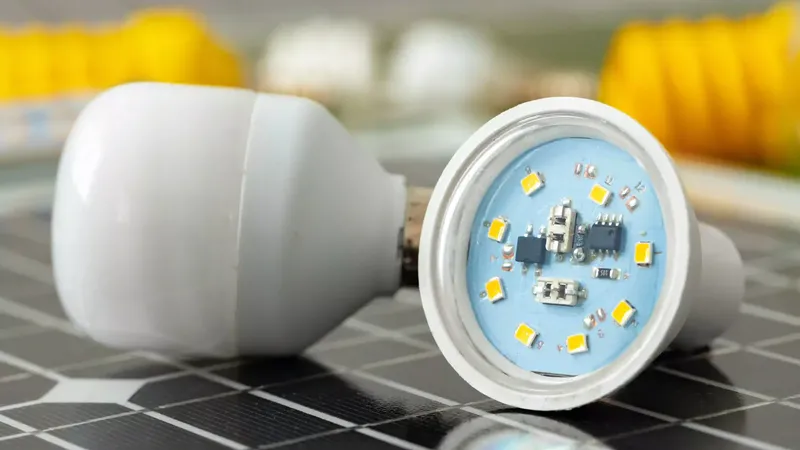
A high CRI value should be linked to the selected color temperature. Warm 2700–3000 K can suit a restorative room, while 3000–3500 K may give a cleaner look for Pilates and reception zones. The CPS A60 Omnidirectional Light lists Ra ≥ 98 and 3000 K, 4000 K, and 6000 K options. That is product data for one source; the final room still needs a full lighting calculation and sample check.
4.Flicker-Free Starts at the Driver and Dimmer
A room can look stable and still have poor temporal performance. LED output follows the driver and control signal, so a light that is acceptable at full output may behave differently at a low dim level. A flicker-free lighting request should cover the complete control range, the dimming protocol, the driver, and the actual mains conditions.
Do not accept “flicker-free” as a label without test information. Ask which metric was measured, at which output levels, with which dimmer, and whether the result is from a laboratory or from the installed room. Pst LM and SVM are more useful reporting terms than a vague statement. The CPS article on flicker-free lighting systems explains the role of driver ripple and percent flicker.
5.Control Glare, CCT, and Reflected Light
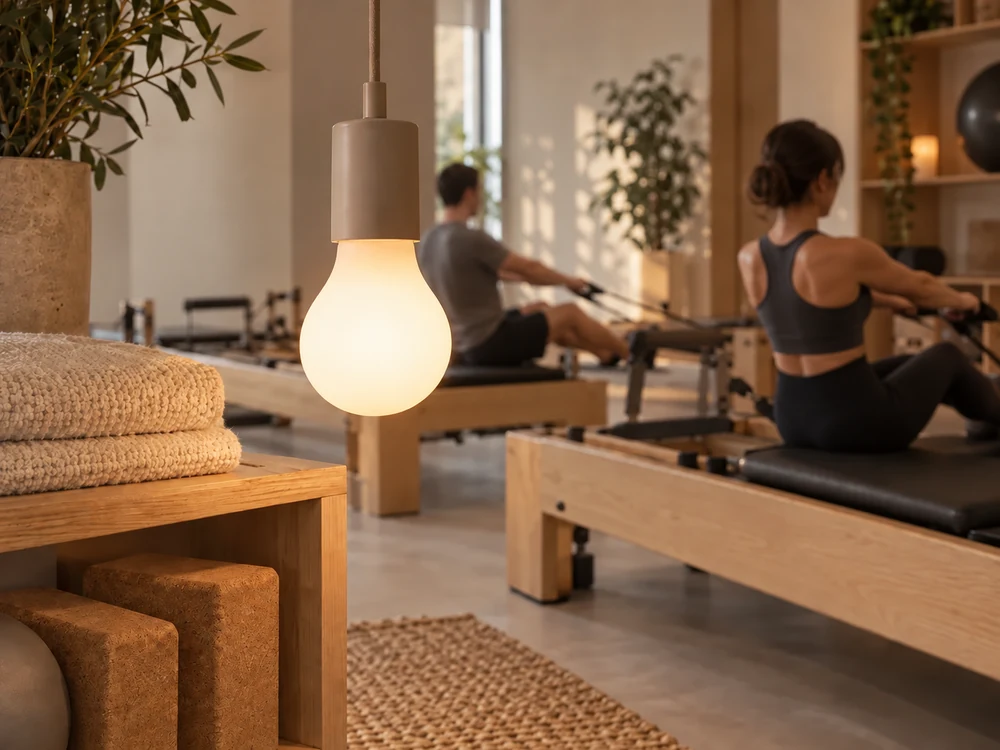
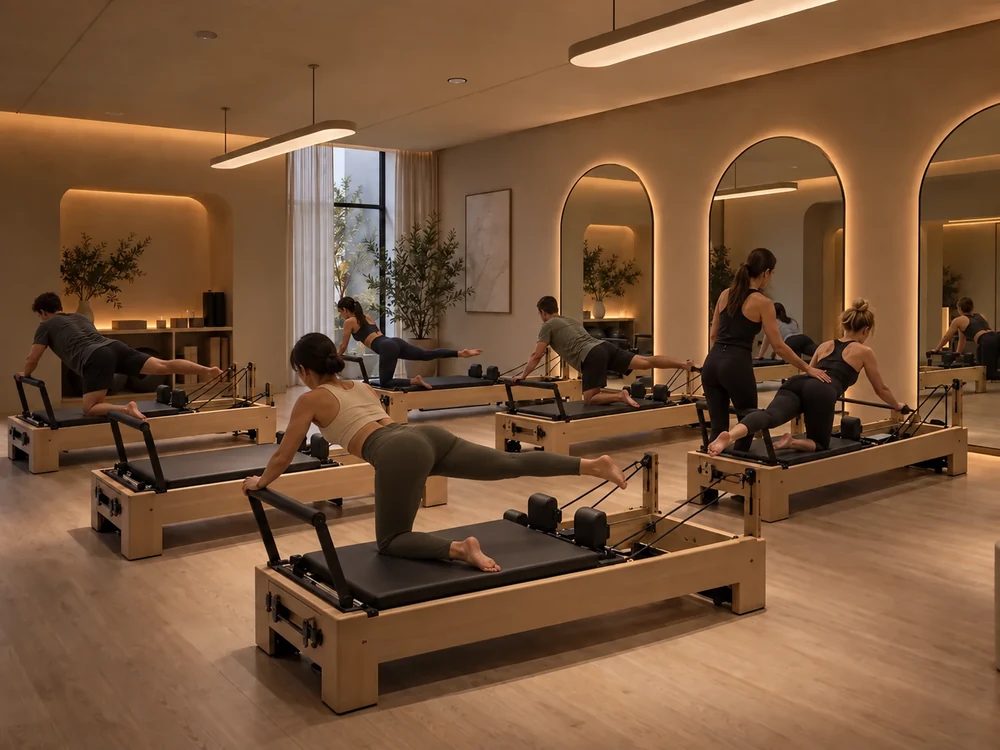
The driver review leads back to the visible room. People spend long periods looking upward, forward, and into mirrors. In Pilates studio lighting, a bright downlight above a reformer, a glossy floor reflection, or an exposed pendant can pull attention away from movement. Use broad diffused sources, shielded optics, suitable spacing, and separate zones near mirrors and windows.
Color temperature should also support the studio schedule. A single static setting is simple, but tunable or separately switched warm scenes can make the last class feel less clinical. The aim is not decorative darkness. It is a legible room with low source luminance, balanced wall brightness, and enough vertical light for an instructor to read posture.
6.Check the Product and Control System Together
The luminaire, driver, dimmer, control gateway, and circuit layout work as one system. A good product can still perform badly with an incompatible dimmer or an unsuitable control curve. For wellness studio lighting, ask for IES or LDT files, dimming compatibility data, power factor, color tolerance, driver location, emergency-lighting strategy, and replacement access before the order is placed.
This matters even for simple indoor sources. The CPS G9L Omnidirectional Light lists Ra ≥ 98, while the CPS guide to LED flicker troubleshooting notes the role of loose connections, drivers, and dimmer compatibility. Those checks should be part of the design review, not a post-installation repair plan.
7.Case Evidence and Commissioning Workflow
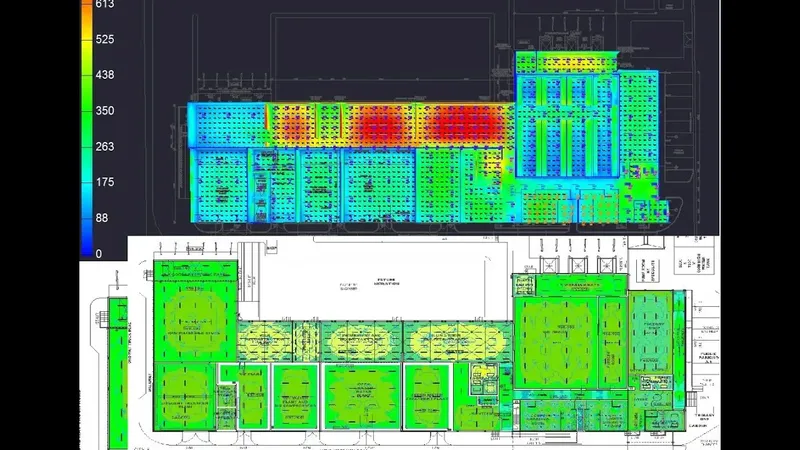
CPS recently documented a multi-sport gymnasium lighting retrofit that addressed uneven illuminance, glare, color rendering, and stroboscopic flicker. It is not a yoga or Pilates case, so its lux values should not be copied into a studio. Its process is still relevant: define the use, confirm product data, model the room in DIALux or AGi32, and commission the result in the venue.
The final site check should record lux at the working plane, vertical light at the instructor position, dimming scenes, color consistency, reflections in mirrors, and flicker measurements at full and low output. A commissioning photo set and scene schedule give operators a simple reference when they change a driver, add fittings, or alter room finishes later.
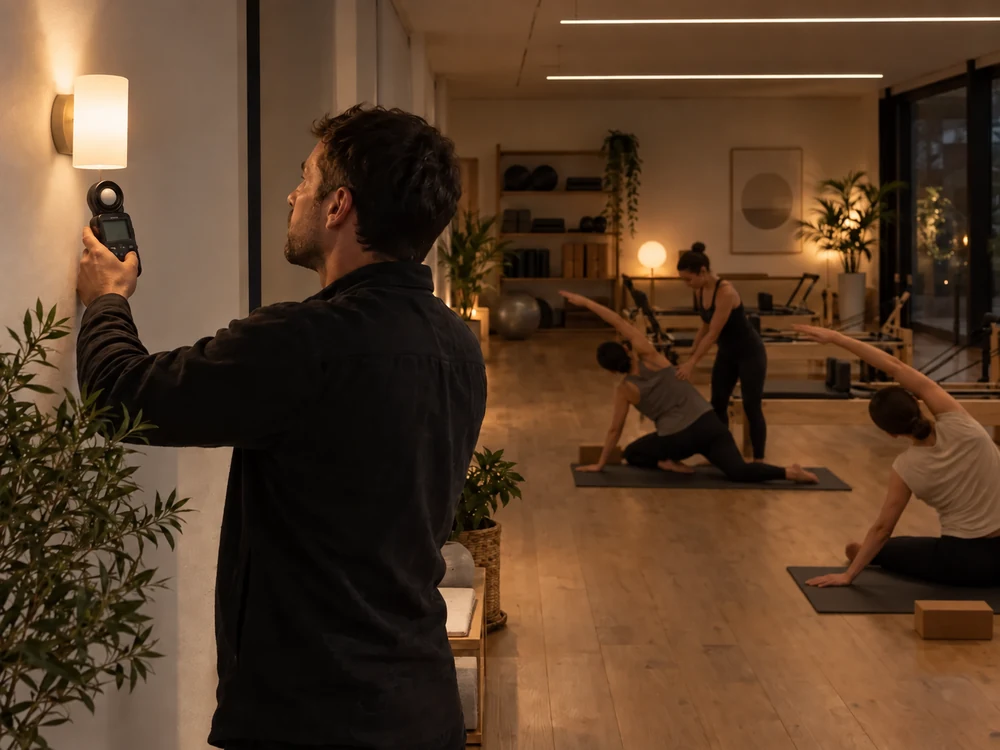
A calm studio does not come from simply lowering the lux value. It comes from layered scenes, reliable LED studio lighting, good color rendering, low glare, and verified temporal performance. When a yoga and Pilates studio lighting specification treats these items together, the studio can support both quiet practice and clear professional instruction.
8.Technical Sources
CIE TN 012:2021: Measurement of temporal light modulation
IEC TR 63158: Objective test method for stroboscopic effects
IES Lighting Library: lighting design and application guidance
Keywords
yoga studio lighting, Pilates studio lighting, low lux lighting, high CRI lighting, flicker-free lighting, LED studio lighting, studio glare control, dimmable LED lights, Pst LM, SVM, lighting uniformity, wellness studio lighting