Contents
1. Pole Height Is an Optical Decision
2. Use Height Rules as Starting Points
3. A, B, and C Poles Do Different Work
1.Pole Height Is an Optical Decision
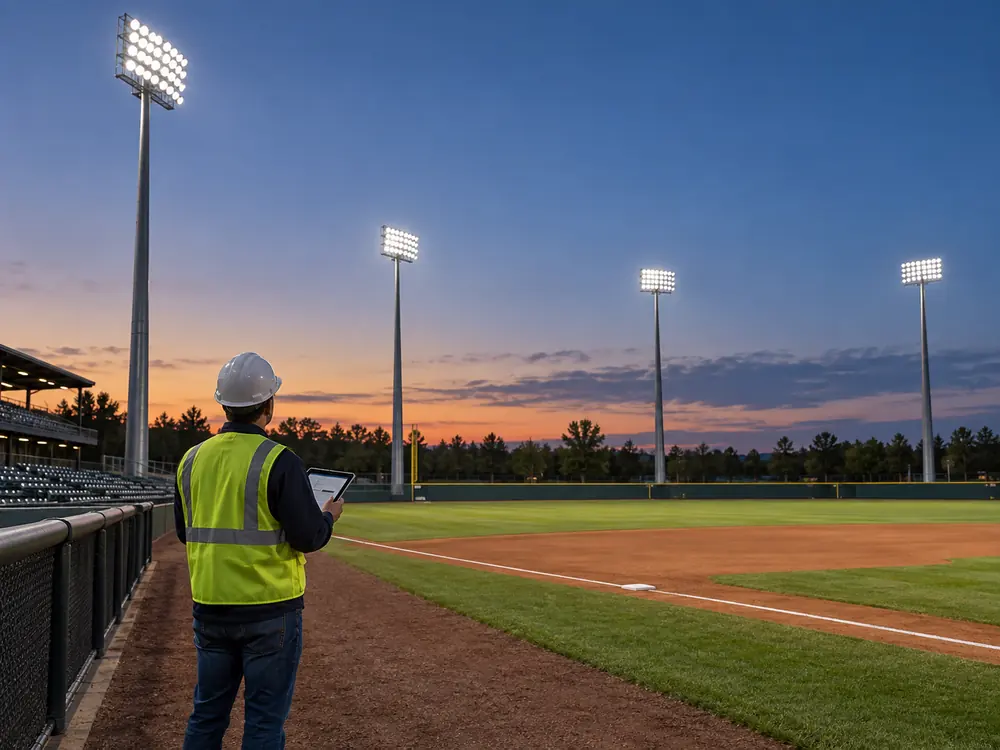
Picture an outfielder turning to follow a high ball. A low-mounted floodlight may still deliver enough lux to the grass, yet its luminous surface can sit directly in the player’s view. A taller mast lets the same design use steeper downward aiming and can move the source away from that critical sightline. This is why baseball field pole height is not a simple civil dimension. It is part of the optical design.
Height also changes throw distance, beam spread, fixture count, and wind load. A 21 m mast is not automatically better than an 18 m mast, and a 30 m mast is not automatically better than both. The useful height is the one that produces the required lighting uniformity, vertical light, and glare control with a safe, buildable structure.
2.Use Height Rules as Starting Points
ANSI/IES baseball guidance uses a minimum mounting height of about 21.3 m (70 ft) for regulation baseball as a useful starting point. It also explains why the height may need to increase when more luminaire rows are required: the top of the defined beam should remain at least 10° below the luminaire plane. These are design rules, not a permit to select a mast without a photometric model.
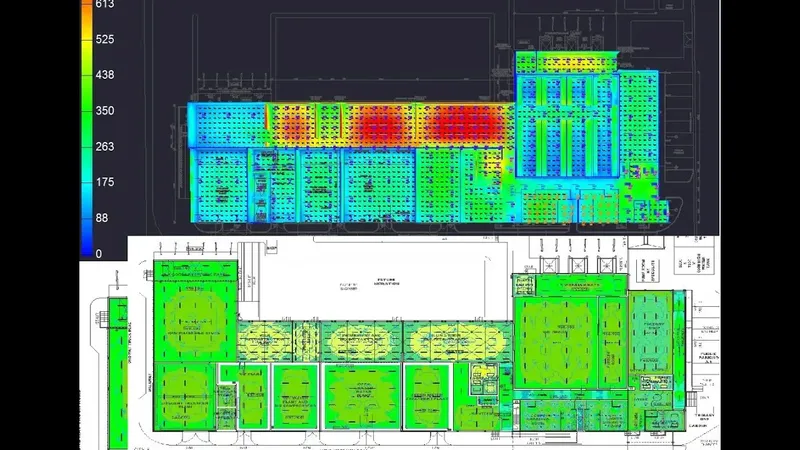
A practical layout begins with field dimensions, pole setbacks, fence line, and available service access. The pole height then follows the longest aiming vector, the beam type, and the permitted glare zones. The CPS guide to DIALux and AGi32 sports-lighting simulation shows why software is essential once those inputs are known.
3.A, B, and C Poles Do Different Work
Baseball layouts often separate poles into A, B, and C positions. A poles sit closer to the infield and foul territory. B poles work toward the diagonal and outer infield. C poles serve the longer outfield throws. The IES rule-of-thumb diagrams use different geometric checks for these zones because each one has a different longest aiming distance.
This approach avoids a common error: giving every mast the same height because the pole schedule looks tidy. Equal heights can force shallow aiming from a deep outfield position or a dense luminaire bank near home plate. A good baseball lighting pole layout keeps lamps away from the batter, pitcher, catcher, and outfielder glare zones, then gives each pole only the beam tasks it can perform well.
4.Height Also Changes the Structure
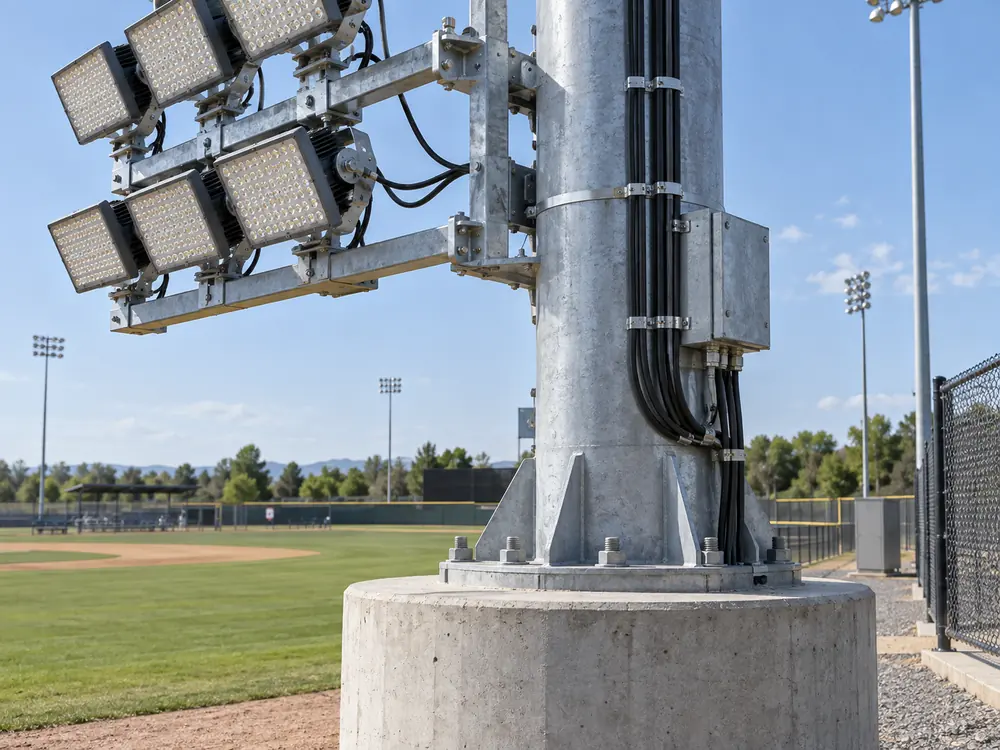
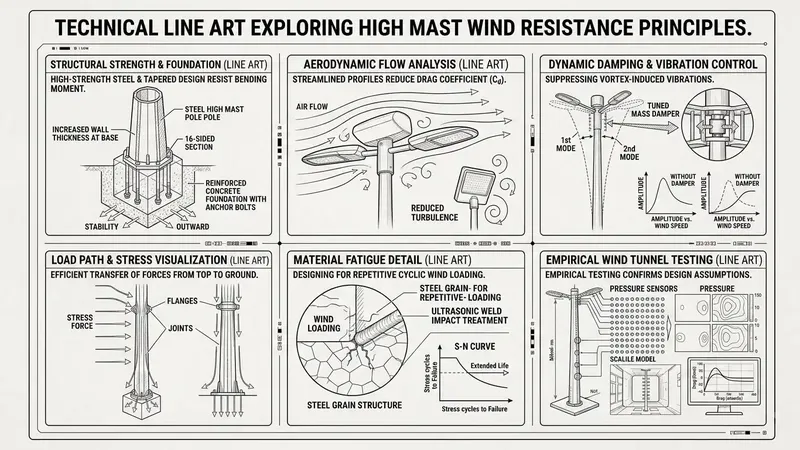
Every extra metre affects the pole shaft, headframe, foundation, maintenance plan, and wind design. The fixtures and brackets contribute effective projected area, or EPA. That area, mast height, local wind speed, terrain, and foundation capacity must be reviewed together. A photometric pass cannot prove that a high mast is structurally suitable.
The CPS discussion of wind resistance and structural calculations for high masts describes this link. The team should obtain the luminaire weight, EPA, bracket details, pole calculation, foundation schedule, and maintenance method before issuing a final equipment order.
Maintenance access also changes the decision. A taller mast may need a lowering system, a service vehicle, or a planned shutdown procedure. The project team should confirm safe access to drivers, surge-protection devices, brackets, and aiming marks before installation, not after the first failure.
5.Validate the Final Layout
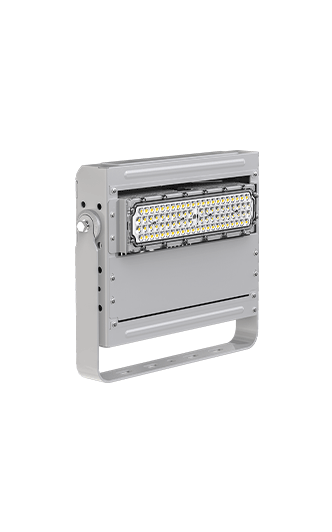
The final review should compare at least two mast-height options using verified IES or LDT files. Check horizontal and vertical illuminance, max:min uniformity, glare views, spill light, pole loading, and maintenance access. Also confirm that an LED projection light has the needed beam distribution and aiming bracket, rather than selecting it by wattage alone.
After construction, an engineer should confirm mast height, fixture orientation, aiming schedule, and measurement grid. The final walk-through must include home plate and deep outfield. The best high-mast baseball lighting plan is not the tallest option. It is the one that proves useful light, controlled glare, and a stable structure for that particular field.
6.Technical Sources
Illuminating Engineering Society: ANSI/IES RP-6-22
Keywords
baseball field pole height, baseball high mast lighting, baseball lighting pole layout, LED sports floodlights, high-mast structural design, floodlight aiming, glare control, lighting uniformity, vertical illuminance, DIALux simulation