Contents
1. The Environment Changes the Design Brief
2. Indoor Tennis Lighting Priorities
3. Outdoor Tennis Lighting Priorities
4. Key Design Differences Compared
1.The Environment Changes the Design Brief

A tennis club may use the same court size indoors and outdoors, but it cannot use the same tennis court lighting logic. A roof creates a fixed ceiling, dark trusses, reflections, and heat near the luminaires. An outdoor court adds wind, rain, salt exposure in some areas, spill light, and a changing dark sky. Each condition changes where a player sees the ball.
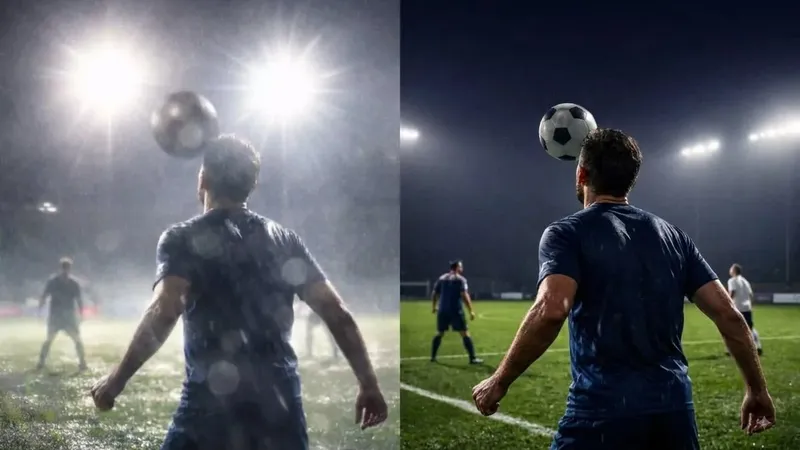
That difference becomes clear during a high lob or serve. An indoor player may look toward a bright fitting against a dark ceiling. An outdoor player may see a floodlight against the sky or a nearby home. Good LED tennis lighting therefore starts with the sightline and the enclosure, not with one lux number.
2.Indoor Tennis Lighting Priorities
Indoor tennis halls usually use truss-mounted or ceiling-mounted luminaires. The key limit is mounting height. A low roof can put a bright source in the path of a serve, smash, or high defensive shot. Designers should use wider optical distributions, keep luminaires outside key ball paths where possible, and check glare from baseline and net positions.
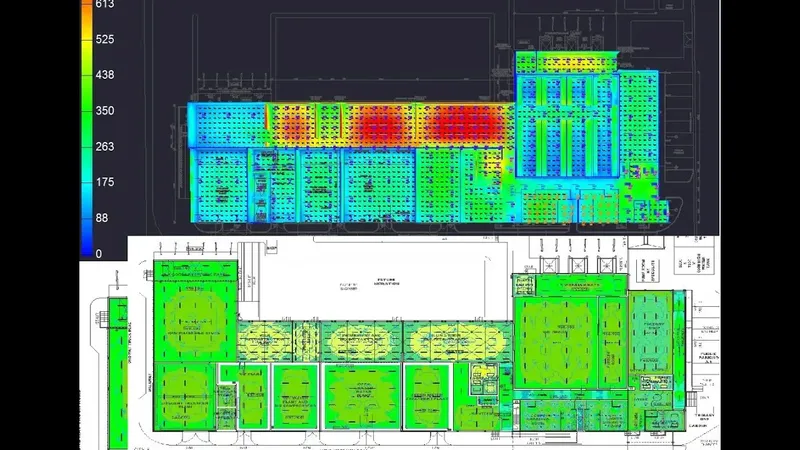
The hall surface also matters. White ceilings, glossy wall panels, and light-colored courts can create reflected brightness. A lighting calculation should include ceiling and wall reflectance, then verify horizontal illuminance, vertical illuminance, uniformity, and glare control. The CPS guide to DIALux and AGi32 sports lighting simulation explains why validated IES or LDT data are essential before equipment is fixed to a roof.
3.Outdoor Tennis Lighting Priorities
Outdoor courts have more freedom for pole height and setback, but every new pole changes the aiming geometry. Side-mounted sports floodlights can keep direct light away from the net and baseline views. The designer should also place poles outside the player run-off area and keep beam spill away from roads, homes, and adjacent courts.

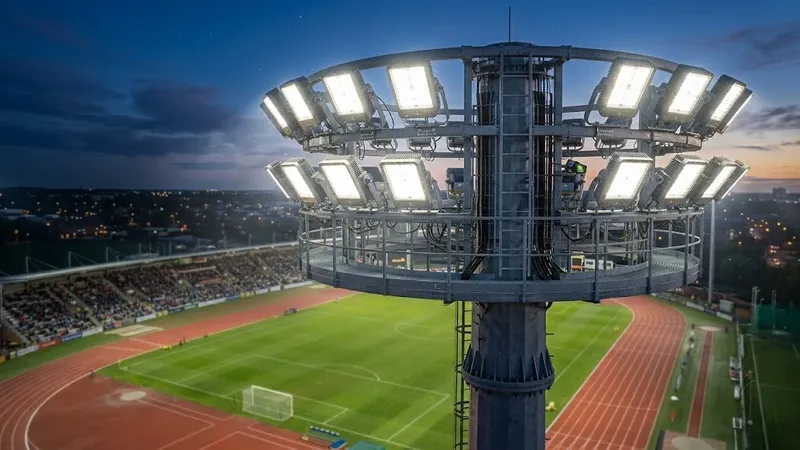
Weather changes the product specification too. An outdoor tennis court LED light needs an appropriate IP rating, corrosion-resistant housing, sealed cable entry, surge protection, and a mast that is checked for wind loading. The CPS high-mast wind and structural guide shows why luminaire area, bracket geometry, pole height, and foundations must be assessed as one system.
4.Key Design Differences Compared
The figures below are concept-stage checkpoints. A final tennis lighting design must follow the competition brief, local code, court geometry, and approved luminaire photometry.
5.A Practical Design Workflow
First, define the real use: coaching, club play, tournament play, recording, or broadcast. The ITF World Tennis Tour guidance calls for a minimum 500 lx for artificial lighting used for high-level international tennis, with a recommended highest-to-lowest reading ratio no greater than 1.5:1. A broadcast event can need a higher, venue-specific target and more vertical light.
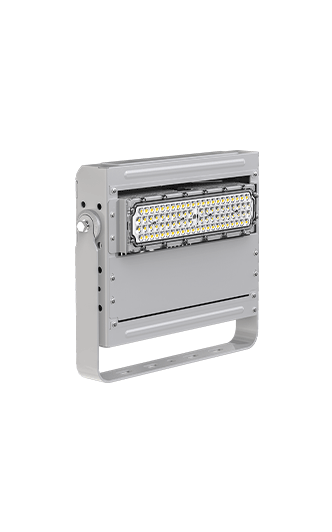
Next, model the court and its full surroundings. Test baseline, service-box, net, and high-ball views. Then commission the finished system with calibrated measurements and a recorded aiming schedule. A product such as the Dubhe Projection Light 1000W offers useful optical options, but the calculation and site verification decide whether the tennis court lighting works for players.